Michael Carrick Admits Manchester United Badly Missed Key Player in Frustrating Sunderland Draw
In a candid post-match revelation that has sent shockwaves through the Manchester United fanbase, interim manager Michael Carrick has openly admitted that his side sorely missed a pivotal player during their goalless stalemate against Sunderland at the Stadium of Light. The 0-0 draw, which came just days after United secured their return to the Champions League with a victory over Liverpool, highlighted ongoing squad imbalances and raised fresh questions about rotation policies as the Premier League season nears its conclusion.
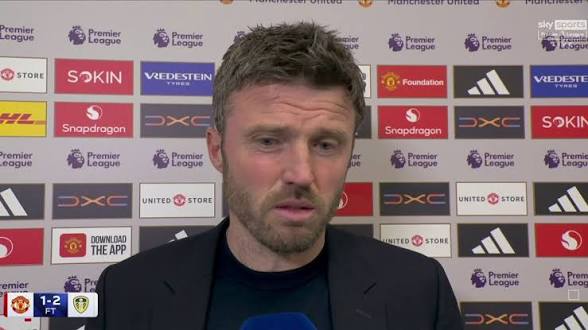
Speaking to journalists in the mixed zone after the match, Carrick did not shy away from the shortcomings. “I thought we would be able to cope without him, that’s why I benched him against Sunderland, but unfortunately we can’t do without him at the moment. He’s the key to our game,” the former United midfielder reportedly stated. While Carrick stopped short of naming the player in his initial comments, sources close to the club and widespread speculation among fans and pundits point strongly towards a central figure whose absence disrupted United’s rhythm in midfield and attack.
The comments have ignited a firestorm on social media, with hashtags like #WeMissedHim and #BenchTheWrongPlayer trending among Red Devils supporters. Many fans echoed the sentiment in the headline: “WE COULD HAVE WON THE GAME WITH HIM.” Videos of frustrated United players, combined with Sunderland’s organized defense, have only amplified the narrative that one key omission cost United all three points in what should have been a winnable away fixture against a mid-table side.
Context of the Match: A Tale of Missed Opportunities
The game itself was a tale of two halves marked by frustration for the visitors. Sunderland, buoyed by a passionate home crowd at the Stadium of Light, set up with a compact 4-4-2 that frustrated United’s possession-based approach. Despite dominating the ball for long periods, Carrick’s men lacked the cutting edge that has defined their better performances this season. Goalkeeper Senne Lammens was forced into several key saves, preserving a clean sheet, but United’s attack looked blunt.
Carrick had made significant changes to the starting lineup, including resting key figures as part of squad rotation. With Champions League qualification already in the bag, the interim boss aimed to freshen legs and give fringe players opportunities. However, the decision to bench the player in question—widely believed to be a dynamic midfielder or forward whose vision and energy dictate United’s tempo—backfired. Without his presence, passes went astray, pressing intensity dropped, and creative sparks were few and far between.
Eyewitness accounts from the press box described United as “toothless” in the final third. Crosses were overhit, shots were blocked, and the midfield struggled to transition from defense to attack seamlessly. One prominent analyst noted that the team’s xG (expected goals) hovered disappointingly low, underscoring the lack of genuine goal threat. Sunderland, meanwhile, grew into the game and created dangerous counters, testing United’s backline repeatedly.
Post-match statistics painted a clearer picture: United completed over 600 passes but converted little of that dominance into clear chances. Possession sat at around 62%, yet shots on target were limited. The absence of the key player’s trademark runs, link-up play, and ability to unlock compact defenses was glaringly obvious to anyone watching.
Carrick’s Honest Assessment and Tactical Reflections
Carrick’s admission marks a rare moment of vulnerability from the interim manager, who has generally projected confidence since stepping into the role. In his full press conference, he expanded on the theme without directly contradicting his rotation strategy. “We have a strong squad, and I believed the players selected could handle the task. But football teaches you lessons every week. This one showed us that certain individuals are irreplaceable right now as we build towards consistency,” he said.
He praised Sunderland’s organization and work rate, refusing to use the result as an excuse for broader issues. “They made it difficult, and we had to dig deep. A point away from home with a clean sheet isn’t the end of the world, but we know we can be better.” When pressed on the benching decision, Carrick reiterated his belief in squad depth but conceded the visible drop in performance. “He brings something unique—energy, leadership on the ball, the ability to make the team click. We missed that cohesion today.”
This honesty contrasts with some of his earlier comments this season, where he defended rotation robustly. Insiders suggest the admission reflects growing pressure to deliver results even in low-stakes games, as the club evaluates his long-term future beyond the interim period. Speculation about permanent managerial candidates continues, but performances like this could influence boardroom thinking.
Who Is the Mystery Key Player? Fan Theories and Club Dynamics
While Carrick remained coy, fans and pundits have zeroed in on likely candidates. Leading theories center on players like Bruno Fernandes, whose creativity and goal contributions have been vital, or a defensive anchor like Casemiro, whose experience provides stability. Others point to forward Benjamin Sesko or Joshua Zirkzee, given reports of rotation and isolation in attack.
One fan on social media captured the mood: “Bench our best creator and wonder why we can’t break down a parked bus? Carrick knows the truth now.” Another highlighted tactical ripple effects: “Without him dictating tempo, we looked lost. Every pass took an extra touch, giving Sunderland time to regroup.”
This episode underscores deeper squad issues at Old Trafford. Despite improved form under Carrick, inconsistencies persist. Injuries, fatigue from a congested schedule, and questions over certain signings have tested the group. The player in question’s importance highlights how United still rely heavily on individuals rather than a fully fluid system—a legacy challenge for any manager.
Fan Reactions: Anger, Analysis, and Calls for Change
Social media erupted within minutes of Carrick’s comments leaking. United’s global fanbase, known for its passion, flooded platforms with memes, analysis, and demands. “We could have won with him starting. Simple as,” read one viral post garnering thousands of likes. Supporters shared clips of the player’s past highlights against similar opponents, contrasting them with Saturday’s blunt display.
Former players and pundits weighed in. Some defended Carrick’s experimentation, arguing it’s necessary for squad management late in the season. Others were more critical, suggesting the benching showed a misjudgment of the opponent. “Sunderland away is never easy. You play your strongest XI,” one ex-United star commented on a podcast.
Among traveling fans at the Stadium of Light, the mood was one of disappointment mixed with pragmatism. “We’re in the Champions League, that’s the big prize,” said one supporter. “But throwing away points like this against teams we should beat stings. Especially when the manager admits we missed a big player.”
The reaction extends beyond casual fans. Season ticket holders and analysts have used the moment to debate United’s summer transfer strategy. With the window approaching, calls for reinforcements in midfield and attack have intensified. “Sign players who reduce our reliance on one guy,” urged a prominent fan account.
Broader Implications for Manchester United’s Season and Future
This draw, while not catastrophic, fits into a pattern of dropped points against lower sides that has characterized United’s campaign. Champions League qualification provides breathing room and financial boost, yet inconsistencies raise doubts about competing at the highest level next season.
Carrick faces a balancing act: integrating youth, managing senior stars’ minutes, and maintaining momentum. His admission could be a masterstroke in transparency, rallying the squad around the missing player’s return, or it could invite scrutiny over selection.
Looking ahead, United have winnable fixtures remaining. The return of the key player is anticipated to restore balance. Training reports suggest he is pushing for a start in the next match, eager to prove his value once more.
For Sunderland, the result represents a moral victory. Manager and players celebrated the point as a hard-earned reward for their discipline. It keeps their survival or mid-table hopes alive and adds to their respectable home record against bigger clubs.
Tactical Deep Dive: What Changed Without Him?
Analysts have pored over the numbers. United’s progressive passes dropped noticeably in the player’s absence. Pressing intensity, measured by PPDA (passes per defensive action), favored Sunderland more than usual. The team’s attacking width suffered, with full-backs less supported in overlaps.
In possession, United often circulated the ball sideways without penetration. The key player’s typical role—dropping deep to pick up possession, driving forward, or providing killer through balls—was distributed unevenly among teammates, leading to turnovers and transitions in Sunderland’s favor.
Set pieces, a traditional strength, yielded little. Without his delivery or movement, opportunities were wasted. Defensively, the midfield gap allowed Sunderland runners more freedom, forcing center-backs into uncomfortable situations.
These observations validate Carrick’s post-match honesty. They also offer a blueprint for improvement: better integration of squad options or tactical tweaks to compensate for absences.
Looking Forward: Lessons Learned and Optimism Remains
Despite the frustration, Carrick struck a positive tone overall. “This is part of the journey. We learn, we adapt, and we come back stronger.” The squad’s mentality in grinding out a point was highlighted as a positive, showing resilience even on an off day.
For fans, the episode is a reminder of the fine margins in football. One player’s presence can transform a draw into a win. As the season winds down, focus shifts to maximizing remaining points and preparing for European competition.
The full story continues to unfold, with Carrick’s comments likely to dominate discussions until the next fixture. United supporters will be watching closely to see if the manager follows through by reinstating the “key to our game” promptly.
In the grand scheme, this match is a minor blip in a promising interim tenure for Carrick. Yet it serves as a valuable lesson: even with depth, certain talents remain essential. Manchester United’s quest for consistency marches on, with one key figure’s return expected to light the spark once more.