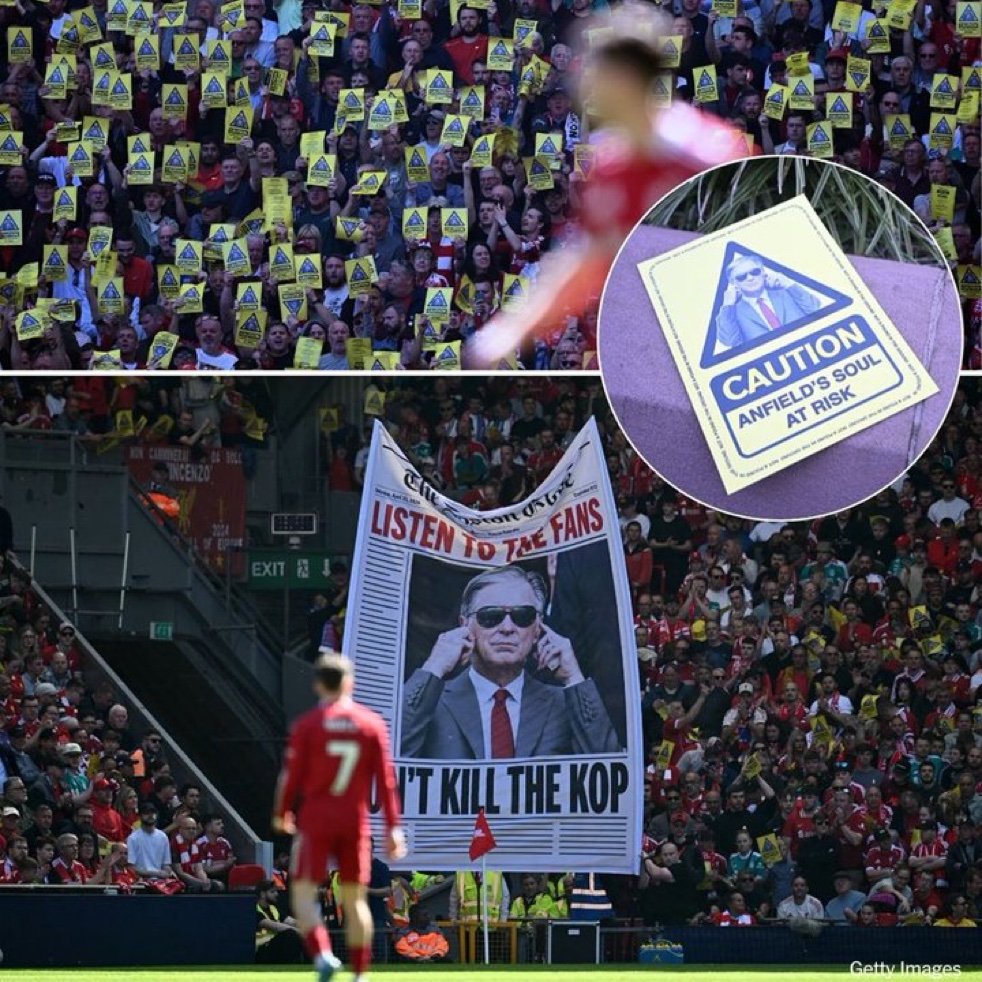
Thousands of Liverpool fans transformed the famous stadium into a sea of yellow on Saturday, April 25, 2026, during the Premier League clash with Crystal Palace. In the 13th minute of Liverpool’s 3-1 victory, supporters across all four stands held up bright yellow cards in a coordinated and visually striking demonstration. Chants of “You greedy bastards, enough is enough” echoed around Anfield, while large banners unfurled with powerful messages: “Listen to the fans – Don’t kill the Kop” and “Caution: Anfield’s soul at risk.”
At first glance, many casual observers might have assumed the protest was linked to on-pitch frustrations — perhaps the controversial moment involving Crystal Palace’s Daniel Muñoz, the injury to Mohamed Salah that later ruled him out for the rest of the season, or even the uncertain futures of stars like Andy Robertson and Salah himself. But the real reason ran much deeper, and it has left fans, pundits, and the club’s hierarchy reeling.
The Trigger: Three Years of Ticket Price Increases
The protest was the latest — and most visible — escalation in a growing dispute between Liverpool supporters and the club’s ownership, Fenway Sports Group (FSG). Earlier in 2026, Liverpool announced plans to raise general admission ticket prices in line with inflation for the next three seasons. What might sound like a modest annual adjustment has been interpreted by many fans as a breaking point for the working-class identity of the club.
Supporters’ groups, including Spirit of Shankly (SOS) and Spion Kop 1906, organised the “Show FSG the Yellow Card” action. Around 75,000 yellow cards were printed and distributed outside the stadium, in local pubs, and even via a protest van parked near the AXA Training Centre earlier in the week displaying the stark warning: “Caution: Anfield’s soul at risk.”
The cards themselves carried a striking design: a triangular warning sign featuring an image resembling FSG principal owner John W. Henry, with the message “CAUTION – ANFIELD’S SOUL AT RISK.” Large banners in the stands reinforced the message, showing Henry with hands over his ears alongside the plea “Don’t kill the Kop.”
Fans also took part in a “not a pound in the ground” boycott, refusing to purchase food, drink, or merchandise inside Anfield as a further show of discontent.
Why This Protest Hit So Hard
For many Liverpool supporters, the issue goes far beyond a few extra pounds on a ticket. Anfield has long been seen as one of the last bastions of affordable, passionate football in the Premier League. The club’s famous “This Is Anfield” ethos and the legendary atmosphere of the Kop have been built on accessibility for local communities, not just corporate hospitality or sky-high prices.
Supporters argue that repeated price rises risk pricing out the very fans who create the unique Anfield roar — the lifelong Scousers, multi-generational families, and die-hard supporters who have sustained the club through thick and thin. One fan group representative said: “This isn’t just about money. It’s about the soul of the club. If Anfield becomes another sanitised, expensive stadium that only the wealthy can afford, we lose what makes us special.”
An open letter sent by the Liverpool Supporters’ Board to John W. Henry expressed “deep concern for the future direction of the club.” It highlighted fears that the increases, combined with other commercial decisions, signal a shift away from the values that Jürgen Klopp helped restore during his transformative reign.
The timing amplified the anger. The protest unfolded on the same day that Andy Robertson delivered a masterclass performance (scoring and earning praise even from Palace manager Oliver Glasner) and Mohamed Salah was forced off injured — news that was later confirmed as a season-ending hamstring issue. For many, seeing the club push through price hikes while key players face uncertain futures felt tone-deaf.
The Club’s Response and Fan Backlash
Liverpool CEO Billy Hogan has defended the increases, citing rising operational costs at the expanded Anfield and pointing out that rival clubs have implemented larger rises in recent years. In an email to season ticket holders, he urged fans to keep discussions “grounded in facts.” However, Hogan’s reaction when cameras caught him during the yellow-card protest drew fierce criticism online, with some supporters branding it “disgraceful” and out of touch.
Club officials have emphasised ongoing dialogue with the Supporters’ Board and plans for young adult discounts and other measures to improve accessibility. Yet fans feel previous assurances have not translated into meaningful action, leading to the breakdown in trust that sparked yesterday’s highly visible demonstration.
Social media exploded with reactions. Hashtags like #AnfieldsSoulAtRisk and #YellowCardProtest trended throughout the afternoon and into Sunday. Viral clips showed the entire stadium bathed in yellow, creating one of the most striking protest images in recent Premier League history. Many neutrals praised the organisation and creativity of the fans, while rival supporters expressed solidarity, noting similar concerns about ticket affordability across English football.
A Wider Message for English Football
The Anfield protest has reignited national debate about the commercialisation of the Premier League. With broadcasting deals reaching billions and clubs treated as global brands, the fear is that the matchday experience is becoming increasingly detached from its working-class roots.
Spirit of Shankly and other groups have vowed to continue pressure, with further actions possible in the remaining fixtures of the 2025/26 season. They have called on FSG to freeze the planned increases and engage more meaningfully with the fanbase.
For Liverpool, the backdrop to the protest could hardly have been more dramatic. The team secured three vital points thanks to goals from Alexander Isak, Andy Robertson, and Florian Wirtz, keeping their Champions League hopes alive despite the looming absence of Salah. Robertson’s standout display — earning admiration from opposition manager Glasner — provided a reminder of the passion and loyalty that still defines the club on the pitch.
Yet off the pitch, the yellow sea in the stands sent an unmistakable message: fans will not stay silent as they feel the fabric of their club is under threat.
As one banner boldly declared: “Listen to the fans.” Whether FSG and the Liverpool hierarchy truly hear that message — and act on it — could define the next chapter in the club’s relationship with its most important asset: the supporters who make Anfield the special place it has always been.
The images from yesterday will linger long after the final whistle. A stadium turned yellow not in celebration, but in warning. The real reason behind the protest wasn’t a single refereeing decision or on-field controversy. It was a heartfelt cry to protect the soul of Liverpool Football Club before it’s too late.